

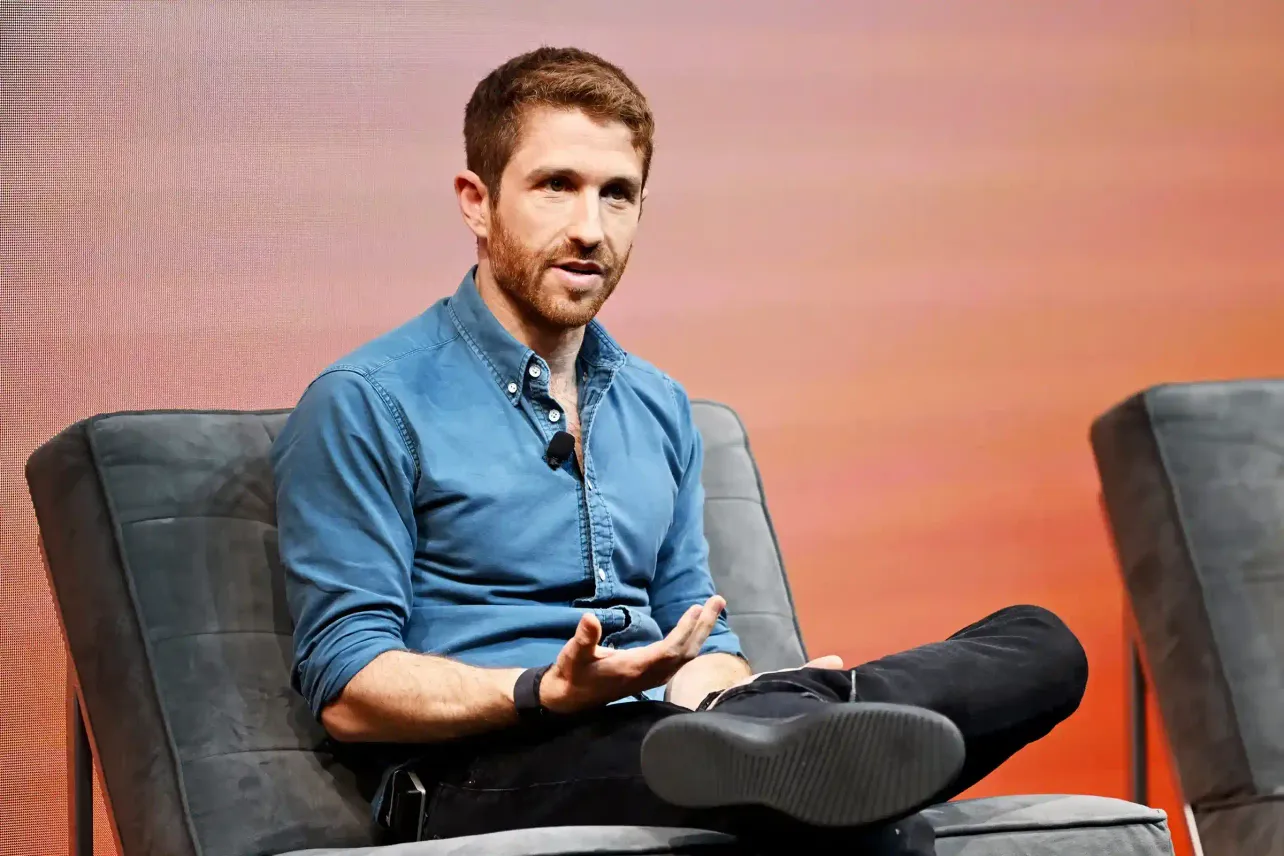
Why Tristan Harris’ new interview pushed me over the edge... again
When I listened to Tristan Harris on The Diary of a CEO recently, what struck me was how familiar it felt. These are the same warnings we’ve been getting from the likes of Hinton and Gawdat. And this is the same Tristan Harris many of us first met in Netflix’s The Social Dilemma, where he correctly warned that social media was quietly rewiring attention, politics and mental health.
In this new episode, titled “AI Expert: We Have 2 Years Before Everything Changes! We Need To Start Protesting!”, he is talking about something even more fundamental: the ongoing race to build artificial general intelligence... at any cost. Not smarter customer service chatbots most imagine when asked about AI, but systems that can do almost any cognitive task a human can do, better and for a fraction of the cost.

Helping HR, talent acquisition, employer branding, and company culture professionals find careers worth smiling about.
What I hear in his argument is hard to argue against:
- The companies racing to AGI are not doing it so we can all have nicer productivity tools.
- They are racing to create a form of intelligence that can run large parts of the economy without needing people.
- If they succeed, the default outcome is that far fewer humans will be needed for cognitive work (jobs).
This framing helps me make sense of what I am seeing in the labour market, particularly around graduate jobs and middle management. It fits scarily well. It also forces me to face a question I would rather dodge: if this is the direction of travel, is mass unemployment just an “unfortunate side effect”, or is it the business model?
What I notice in the data: the disappearing first rung
Once you start looking for it, the evidence around entry-level work is hard to ignore.
In the UK, data from Adzuna and others suggest that since the launch of ChatGPT in late 2022, new entry-level vacancies have dropped by roughly a third. These are the roles that used to be the classic first foot in the door: graduate schemes, apprenticeships, internships and junior posts.
The Guardian, City AM and other outlets report the same pattern:
- Around a 32 per cent decline in UK entry-level vacancies since late 2022.
- Entry-level roles falling from roughly 28.9 per cent of all jobs to about 25 per cent.
- Employers linking this to AI, along with higher labour costs and new regulation.

Momentum isn’t always progress, especially when you always end up back where you started.
Fathom helps you escape the loop. With insight, not intuition.
Personnel Today and other HR titles also pick up that graduate roles specifically are down by around a third year on year, with AI mentioned as a major factor against a backdrop of record competition for remaining roles and falling starting salaries.
Outside the UK, I see a similar story. In Singapore, the official Private Education Institution Graduate Employment Survey shows that only 46.4 per cent of fresh graduates from private universities in 2024 found full-time, permanent roles within six months, down from 58.7 per cent the year before.
When you put all of that together it becomes harder to wave it on as just a blip, or a cycle. It’s starting to look more like a fundamental restructuring of the jobs market. We see...
- Organisations are keeping or even growing some senior roles.
- They are getting way more cautious about hiring at the bottom.
- The step from education into stable work is getting narrower and more competitive.
As someone who thinks about talent pipelines, I find that deeply worrying. If you take a third of the rungs out of the bottom of any ladder, you do not just make it harder to start. You also reshape who can ever make it to the top. The impact this has on the overall talent market, especially over time, should not be underestimated.
 Mike Parsons
What the Wharton report told me about what is happening inside companies
The Wharton Human-AI Research group and GBK Collective have just published their latest AI adoption study, Accountable Acceleration: Gen AI Fast-Tracks Into the Enterprise (linked in sources below). I see it as a kind of X-ray of executive thinking.
A few points jumped out at me when I read the whole thing...
- GenAI is now everyday infrastructure, not a plaything. More than four in five leaders say they use GenAI at least weekly, and almost half say they now use it every day.
- Around three quarters of enterprises in the sample report positive ROI from GenAI already, especially in process-heavy sectors like tech, banking and professional services.
- Budgets for GenAI are rising rapidly, and some of that money is coming by “spending less in other areas”, including workforce and outsourcing costs. In the qualitative responses, one leader spells it out, saying they are reducing entry-level hiring and offshore headcount because AI now does that work.
- When asked directly about hiring plans, leaders are more likely to expect net reductions in entry-level and intern roles over the next few years than in mid-level or executive hiring.
- At the same time, nearly half of leaders worry about “skill atrophy”, particularly for juniors whose skills are still developing.
This isn’t conspiracy theory or scare mongering, executives are already discussing re-allocating budget away from people and towards systems, and their first instinct is to trim at the bottom of the pyramid.
That is exactly the pattern Harris warns about in law and consulting: let the AI handle the grunt work that used to justify large graduate intakes, then wonder later where the next generation of partners and principals went. We’ve already started sliding down the slippery slope.
Helping HR, talent acquisition, employer branding, and company culture professionals find careers worth smiling about.
It is not just grads: the middle of organisations is thinning out too
I used to think this was mainly an early-career problem. Then I looked more closely at what people like Mo Gawdat and Geoffrey Hinton are saying, and at how big employers are restructuring.
Mo Gawdat, the former chief business officer at Google X, has been remarkably direct in his own Diary of a CEO episodes and his books. He argues that AGI will be “better than humans at everything, including being a CEO”, that most knowledge jobs could disappear within a 5-15 year window, and that the idea AI will simply “create more jobs” is, in his words, “100 per cent crap”. And, let’s face it, we’ve been fed that line for three years now and still not offered a scintilla or evidence or hope.
Geoffrey Hinton, often called the “godfather of AI”, has shifted from cautious optimism to much darker warnings. Recent interviews and coverage have him describing a world of “massive unemployment” where AI makes a few people much richer and leaves most people poorer, with current white-collar roles especially exposed.
When I line that up with the corporate news, the picture looks disturbingly coherent:
- Klarna boasts that its AI assistant now does “the equivalent work of 700 full-time customer service agents”, a number that mirrors the 700 staff it laid off in 2022.
- BT plans to cut up to 55,000 roles by 2030, with thousands explicitly expected to be replaced by AI as fibre networks are completed and operations are automated.
- IBM’s CEO has said the company will pause hiring for certain back-office roles and expects around 7,800 positions in HR and other support functions to be replaced by AI over five years.
- HP is now planning to cut 4,000 to 6,000 jobs by 2028, explicitly linking these cuts to AI-driven restructuring and anticipated productivity gains.
- Allianz is preparing to eliminate up to 1,800 jobs in its travel insurance unit, mostly in call centres, as AI systems handle more customer queries and claims.
These are not sci-fi scenarios. They are concrete examples of what it looks like when organisations decide they can deliver the same or better output with fewer people, especially in entry-level support and middle layers.
Momentum isn’t always progress, especially when you always end up back where you started.
Fathom helps you escape the loop. With insight, not intuition.
From where I sit, this is what “the hollowing out of middle management” now looks like in practice:
- Fewer juniors to feed the pipeline.
- Thinner layers of managers, especially in ops and service roles.
- A small, highly paid layer of AI-literate specialists and executives sitting on top of increasingly capable systems.
It is hard to square that with the old assumption that every wave of technology eventually creates more jobs than it destroys. That narrative might be comforting, but this is NOT the same as designing a printing press, it’s a “general” intelligence – that means it doesn’t just replace one profession, it replaces them all.
Why I think this becomes a negative economic loop
Harris talks about AI as “NAFTA for cognitive work”: a structural change that offers cheaper output but hollowed-out communities and a sense of lost economic security. Another analogy that feels uncomfortable and is backed by a body of labour-market research.
Economists like Paul Oyer and Philip Oreopoulos have shown that graduates who enter the labour market in a downturn suffer long-term “scarring”. They earn less for 10 to 15 years, tend to start in lower-quality firms and roles, and only partially catch up over time.
 EBN
EBN
More recent work on youth unemployment highlights multiple layers of damage, from weaker lifetime earnings and employability to poorer health and wellbeing.
When I lay that research alongside the entry-level AI data, it suggests a loop that looks something like this:
- AI and cost pressures encourage firms to cut entry-level and mid-level roles or to replace them with systems.
- Graduates and young workers struggle to get a stable foothold, either remaining unemployed, working in lower-paid, insecure roles, or dropping out of the labour market.
- Those weaker starts depress lifetime earnings and consumption, which means less demand for goods and services.
- Slower demand and squeezed margins push firms back towards more automation and restructuring.
- Governments facing weaker tax receipts and higher welfare costs may themselves look to AI for “efficiency”, feeding the pattern.
In my home, the UK, for example, the number of young people classified as NEET (Not in Education, Employment, or Training) has risen back towards one million, prompting warnings of a “youth jobs crisis” and fears that a generation could be left with patchy work histories and lower lifetime prospects.
I find it hard to ignore the possibility that AI-driven cuts at the start and middle of careers could turn these cyclical problems into something more widespread and permanent.
Why I think “mass unemployment” is the default path, not a crazy outlier
When Harris, Gawdat and Hinton all start using phrases like “massive unemployment” and “most jobs”, it is tempting to dismiss them as alarmist. After all, previous waves of automation created new industries and jobs we could not foresee.
But I notice a few things that are different this time:
- We are not just automating tasks, we are automating intelligence itself, including tasks we used to think of as “high skill” or “creative”.
- The productivity gains are arriving inside organisations long before any serious policy framework is in place to manage the distributional impact.
- The firms leading the race have no incentive to slow down or to share gains broadly. In fact, they’re incentivized to move as fast as they can.
I do not pretend to know the exact numbers, but when I listen to Harris’ argument and then watch the very real job cuts listed above (a pattern that started a few years ago), it is hard for me to say “this will all work out on its own”.
For me, the most honest thing to say is:
- If we do nothing, a world with far fewer human jobs looks like the default outcome of the current incentive structure.
- Avoiding that outcome will require heavy political intervention and coordination, not just individual upskilling or “learning to prompt”.
Which leads to the real question: if you are not sitting in a frontier AI lab or a cabinet office, what can you actually do?
Helping HR, talent acquisition, employer branding, and company culture professionals find careers worth smiling about.
So what can ordinary people do?
The podcast title does not mince its words. Harris says “we need to start protesting”. That is a strong statement, but when I strip it back, I hear four practical calls to action that regular readers can engage with.
1 - Make AI and jobs a voting issue
First, I think we need to treat AI as a core political issue, not a niche tech topic.
For me, that looks like:
- Asking candidates where they stand on AI safety, labour impacts and regulation, in the same way we would ask about climate, health or tax.
- Treating vague promises of “innovation” without any plan for displaced workers as a red flag.
- Supporting concrete policies: from mandatory job-impact assessments for major AI deployments to requirements for large firms to publish transition plans and support packages when they automate.
Right now, governments still rely on tax from human labour and on human voters. If AI-driven GDP growth decouples from employment, that leverage will weaken. I do not want to wait until after that shift before politics catches up.
2 - Normalise protest and public pressure
Second, I agree with Harris that this cannot be solved in meeting rooms alone.
Not everyone can or will march, but there are realistic ways to build pressure:
- Supporting civil-society groups working on humane tech and AI governance.
- Signing and sharing petitions that tie AI regulation explicitly to employment and inequality.
- Joining unions or professional bodies that are building AI literacy and pushing for sane adoption at sector level.
- Turning up to consultations, town halls and party events where AI is on the agenda, and asking very basic questions about who benefits and who pays.
The Social Dilemma was a template: a piece of media that gave people language for something they were already feeling and helped spur conversations and, in some cases, policy. Harris’ new interview can be used in a similar way.
3 - If you work in HR, TA or leadership, use the levers you do have
Many EBN readers actually sit in the middle of this: you do not control global AI labs, but you do influence how your organisation uses AI and how it treats early-career talent.
From that vantage point, I think there are some very specific actions:
- Audit which “training tasks” AI is eating. Look at the tasks that used to build junior capability, from research and drafting to basic modelling and client responses. If AI now does those, deliberately redesign junior roles so there are still human-only responsibilities that build judgement.
- Resist the temptation to shrink early-career pipelines too far. The Wharton/GBK report is already warning about skill atrophy alongside productivity gains. Leaders may save budget this year by cutting intakes, but they also risk hollowing out the future leadership bench.
- Tie AI ROI to people commitments. If an AI project produces hard savings, fight for a proportion of those to be reinvested into apprenticeships, internal mobility, reskilling and coaching.
- Be honest in your employer brand. Candidates will increasingly choose employers based on whether they feel the organisation is using AI to augment people or quietly replace them.
These are not silver bullets, but they are ways to make sure AI is used to enhance human capability rather than quietly undermine it.
4 - Prepare children for a jagged, AI-heavy labour market
With three kids of my own, I find it hard not to think of the future impact on today’s younger generations.
I do not think the answer is to push everyone into coding. If anything, Hinton’s recent comments about “the one industry AI will not threaten” being hands-on physical trades underlined for me that we need a mix of paths.
For parents and educators, I would highlight four priorities:
- AI literacy as a basic skill. Kids will need to know how to use AI tools fluently and safely, in the same way they had to learn basic digital literacy.
- Human strengths where AI still struggles. That means complex physical skills, caring work, face-to-face persuasion, leadership in messy environments, and genuine creativity rooted in lived experience.
- Power literacy. Understanding how regulation, corporate incentives, unions and politics shape working life will matter as much as technical skills. Gawdat and Hinton are both really talking about power and inequality, not just software.
- Realism about debt and career choice. If a profession is already clearly being reshaped by AI, we owe young people an honest conversation about the return on the investment they are being asked to make.
Share the story, not just the fear
Finally, I think there is value in simply spreading awareness in a more deliberate way.
Sharing the Harris episode is one easy step. If you’re worried, fascinated, intrigued... talk about it and share, share, share.
Momentum isn’t always progress, especially when you always end up back where you started.
Fathom helps you escape the loop. With insight, not intuition.
Where am I?
After spending time with the Harris interview, revisiting The Social Dilemma, reading the Wharton/GBK report and digging into the jobs data, I have ended up in a place that feels both pessimistic and oddly clarifying.
On current incentives, I think:
- AI will keep eating into entry-level and mid-level roles in many AI-exposed sectors.
- A world with far fewer human jobs is the default outcome, not an extreme scenario.
- The people who stand to gain most financially from that world have little incentive to slow down.
At the same time, the window for meaningful action has not closed yet. Governments still need voters. Companies still care about reputation and talent. Parents and educators still shape what the next generation expects from work.
Will we use that window and do something proactive, or will we collectively wait for a disaster to strike before we feel the pain of not acting is more than then pain of standing up and doing something.
If we continue to do nothing, the ladder will continue to disappear from both ends. If we treat AI as a political, organisational and personal issue, not just a clever and convenient chatbot, there is at least a chance we can redesign work, education and safety nets so that intelligence becoming cheap does not mean people becoming disposable.
Takeaways
1. AI is not a nicer chatbot, it is a cheaper brain
Listening to Harris, Gawdat and Hinton has shifted how I see AI. The real race is to build intelligence that can do most cognitive work more cheaply than people. Once you accept that, shrinking graduate and mid-level roles stops looking like a blip and starts looking like the plan.
2. The first casualty is the bottom rung of the ladder
Entry level and graduate jobs are already falling faster than overall vacancies, especially in AI-exposed sectors. That means fewer chances to learn on the job, weaker pipelines into senior roles and a generation starting work with more debt and fewer options.
3. The middle of organisations is being quietly hollowed out
The most common mistakes are treating belonging as engagement 2.0, delegating it to HR as a project, and trying to deliver it through slogans, workshops, and events without changing underlying behaviour or systems.
4. Executive behaviour confirms the trend
The Wharton–GBK data shows leaders using GenAI daily, reporting positive ROI and shifting budget away from people and towards systems. When they talk about reducing entry level hiring while worrying about skill atrophy, it tells me this is not theory. It is already in the plan.
5. If we do nothing, mass unemployment is the default path
History does not guarantee that “new jobs will appear” when what is being automated is intelligence itself. On current incentives, a world with fewer human jobs and greater inequality looks like the most likely outcome, not an extreme scenario. Avoiding it will take deliberate action.
6. Ordinary people still have levers, but the window is short
We can vote on AI policy, support regulation tied to jobs, and back unions and civil society groups that are pushing for guardrails. Inside organisations, we can redesign junior roles, protect early-career pipelines and insist that AI productivity gains fund people, not only cost cuts.
7. Preparing the next generation means skills and power, not just prompts
For our kids, AI literacy will matter, but so will very human strengths in physical, relational and creative work, plus an understanding of how power and regulation shape jobs. Sharing conversations like this podcast is one way to move from vague fear to concrete demands about the future of work.
 Fathom
Sources
Adzuna 2025, ‘Number of new UK entry-level jobs has dived since ChatGPT launch – research’, The Guardian, 30 June, viewed 1 December 2025, https://www.theguardian.com/business/2025/jun/30/uk-entry-level-jobs-chatgpt-launch-adzuna
Adzuna 2025, ‘Entry-level jobs plunge by a third since launch of ChatGPT’, The Times, 30 June, viewed 1 December 2025, https://www.thetimes.co.uk/article/entry-level-jobs-plunge-by-a-third-since-launch-of-chatgpt-m8p79msqh
Apple Podcasts 2025, ‘AI Expert: We Have 2 Years Before Everything Changes! We Need To Start Protesting! – Tristan Harris’, The Diary of a CEO with Steven Bartlett, podcast, 27 November, viewed 1 December 2025, https://podcasts.apple.com/jm/podcast/ai-expert-we-have-2-years-before-everything-changes/id1291423644?i=1000738632352
Bartlett, S & Harris, T 2025, ‘AI Expert: We Have 2 Years Before Everything Changes! We Need To Start Protesting!’, YouTube video, viewed 1 December 2025, https://www.youtube.com/watch?v=CYgcJoOwysY
Business Insider 2025, ‘Geoffrey Hinton warns AI will cause mass unemployment and inequality’, Business Insider, September, viewed 1 December 2025, https://www.businessinsider.com/geoffrey-hinton-warns-ai-will-cause-mass-unemployment-and-inequality-2025-9
Business Times 2025, ‘Allianz to cut up to 1,800 jobs due to AI advances’, The Business Times, 26 November, viewed 1 December 2025, https://www.businesstimes.com.sg/companies-markets/banking-finance/allianz-cut-1800-jobs-due-ai-advances
CNA 2023, ‘IBM to pause hiring in plan to replace 7,800 jobs with AI’, Channel NewsAsia, 2 May, viewed 1 December 2025, https://www.channelnewsasia.com/business/ibm-pause-hiring-plan-replace-7800-jobs-ai-bloomberg-news-3457846
City AM 2025, ‘ChatGPT wipes out entry level jobs: quarter of graduate jobs shed in one year as salaries jump’, City A.M., 30 June, viewed 1 December 2025, https://www.cityam.com/quarter-of-graduate-jobs-shed-in-one-year-as-salaries-jump
Economic Times 2025, ‘AI revolution: UK entry-level job vacancies plummet 32% post ChatGPT’, ET HRWorld, 1 July, viewed 1 December 2025, https://hrme.economictimes.indiatimes.com/news/industry/ai-revolution-uk-entry-level-job-vacancies-plummet-32-post-chatgpt/122176816
Economic Times 2025, ‘Ex-Google executive Mo Gawdat predicts a dystopian job apocalypse by 2027’, The Economic Times – Panache, 8 August, viewed 1 December 2025, https://economictimes.indiatimes.com/magazines/panache/ex-google-executive-mo-gawdat-predicts-a-dystopian-job-apocalypse-by-2027-ai-will-be-better-than-humans-at-everything-even-ceos/articleshow/123123024.cms
Fast Company 2024, ‘Klarna says its AI assistant does the work of 700 people after it laid them off’, Fast Company, 28 February, viewed 1 December 2025, https://www.fastcompany.com/91039401/klarna-ai-virtual-assistant-does-the-work-of-700-humans-after-layoffs
Filomena, M 2024, ‘Unemployment scarring effects: An overview and meta-analysis of empirical studies’, Italian Economic Journal, vol. 10, pp. 459–518, viewed 1 December 2025, https://link.springer.com/article/10.1007/s40797-023-00228-4
Guardian 2025, ‘UK faces youth jobs crisis as number of “neets” rises to almost 1m’, The Guardian, 27 February, viewed 1 December 2025, https://www.theguardian.com/business/2025/feb/27/uk-faces-youth-jobs-crisis-as-number-of-neets-rises-to-almost-1m
Hans India 2025, ‘HP to cut 6,000 jobs by 2028 as AI reshapes its global operations’, The Hans India, 27 November, viewed 1 December 2025, https://www.thehansindia.com/technology/tech-news/hp-to-cut-6000-jobs-by-2028-as-ai-reshapes-its-global-operations-1026371
HP 2025, ‘Computer maker HP to cut up to 6,000 jobs by 2028 as it turns more to AI’, The Guardian, 26 November, viewed 1 December 2025, https://www.theguardian.com/business/2025/nov/26/computer-maker-hp-to-cut-up-to-6000-jobs-by-2028-as-it-turns-more-to-ai
HRM Asia 2025, ‘Singapore private uni grads face tougher job market’, HRM Asia, 28 May, viewed 1 December 2025, https://hrmasia.com/singapore-private-uni-grads-face-tougher-job-market
HRreview 2025, ‘Entry-level jobs have declined since ChatGPT launch, data shows’, HRreview, 30 June, viewed 1 December 2025, https://hrreview.co.uk/hr-news/recruitment/entry-level-jobs-have-declined-since-chatgpt-launch/382632
Independent 2025, ‘Entry level jobs fall by nearly a third since ChatGPT launch’, The Independent, 30 June, viewed 1 December 2025, https://www.independent.co.uk/news/business/jobs-chatgpt-ai-automation-adzuna-b2779656.html
Independent 2025, ‘Klarna’s AI replaced 700 workers. It’s trying to bring them back’, The Independent, 2 June, viewed 1 December 2025, https://www.independent.co.uk/news/business/klarna-ceo-sebastian-siemiatkowski-ai-job-cuts-hiring-b2755580.html
Korst, J, Puntoni, S & Tambe, P 2025, ‘2025 AI Adoption Report: Gen AI Fast-Tracks Into the Enterprise’, Wharton School & GBK Collective, Philadelphia, viewed 1 December 2025, https://knowledge.wharton.upenn.edu/special-report/2025-ai-adoption-report
McCulloch, A 2023, ‘UK jobs market: graduate roles down by a third’, Personnel Today, 30 October, viewed 1 December 2025, https://www.personneltoday.com/hr/uk-graduate-jobs-market-adzuna
McKinsey Global Institute 2022, ‘Help wanted: Charting the challenge of tight labor markets in advanced economies’, McKinsey & Company, viewed 1 December 2025, https://www.mckinsey.com/mgi/our-research/help-wanted-charting-the-challenge-of-tight-labor-markets-in-advanced-economies
Oyer, P 2006, ‘Initial labor market conditions and long-term outcomes for economists’, Journal of Economic Perspectives, vol. 20, no. 3, pp. 143–160, viewed 1 December 2025, https://www.aeaweb.org/articles?id=10.1257/jep.20.3.143
Oreopoulos, P, von Wachter, T & Heisz, A 2012, ‘The short- and long-term career effects of graduating in a recession’, American Economic Journal: Applied Economics, vol. 4, no. 1, pp. 1–29, viewed 1 December 2025, https://www.aeaweb.org/articles?id=10.1257/app.4.1.1
Reuters 2025, ‘Allianz to cut up to 1,800 jobs due to AI advances, says source’, Reuters (via The Straits Times), 26 November, viewed 1 December 2025, https://www.reuters.com/business/world-at-work/allianz-cut-up-1800-jobs-due-ai-advances-says-source-2025-11-26
SIEPR 2013, ‘Recession graduates: The long-lasting effects of an unlucky draw’, Stanford Institute for Economic Policy Research, viewed 1 December 2025, https://siepr.stanford.edu/publications/policy-brief/recession-graduates-long-lasting-effects-unlucky-draw
SkillsFuture Singapore 2025, ‘Close to 3 in 4 private education institution graduates in employment within 6 months after graduation’, SkillsFuture Singapore, media release, 26 May, viewed 1 December 2025, https://www.ssg.gov.sg/newsroom/close-to-3-in-4-private-education-institution-graduates-in-employment-within-6-months-after-graduation-amidst-overall-lower-hiring-demand
Straits Times 2025, ‘Less than half of private uni grads find full-time jobs, despite slight increase in salaries’, The Straits Times, 26 May, viewed 1 December 2025, https://www.straitstimes.com/singapore/less-than-half-of-private-uni-grads-find-full-time-jobs-despite-slight-increase-in-salaries
Straits Times 2023, ‘UK telco giant BT to cut up to 55,000 jobs by 2030 as fibre and AI arrive’, The Straits Times, 18 May, viewed 1 December 2025, https://www.straitstimes.com/business/bt-to-cut-up-to-55000-jobs-by-2030-as-fibre-and-ai-arrive
Tam, G 2025, ‘Less than half of private uni grads find full-time jobs, despite slight increase in salaries’, Yahoo News Singapore, 26 May, viewed 1 December 2025, https://sg.news.yahoo.com/less-half-private-uni-grads-092000564.html
Times Higher Education 2024, ‘Record competition, lower salaries in “tough” UK graduate job market’, Times Higher Education, 17 October, viewed 1 December 2025, https://www.timeshighereducation.com/news/record-competition-lower-salaries-tough-graduate-job-market
Wharton Human-AI Initiative & GBK Collective 2025, ‘Accountable Acceleration: Gen AI Fast-Tracks Into the Enterprise https://ai.wharton.upenn.edu/wp-content/uploads/2025/10/2025-Wharton-GBK-AI-Adoption-Report_Full-Report.pdf
Wikipedia 2024, ‘The Social Dilemma’, Wikipedia, viewed 1 December 2025, https://en.wikipedia.org/wiki/The_Social_Dilemma
Windows Central 2025, ‘“The idea that AI will create new jobs is 100% crap”: Former Google exec says even CEOs are on the tech’s chopping block’, Windows Central, 10 August, viewed 1 December 2025, https://www.windowscentral.com/artificial-intelligence/former-google-exec-even-ceo-on-tech-chopping-block
Yahoo News 2025, ‘The one industry where AI will not threaten your job, says “Godfather of AI”’, Yahoo News, 27 November, viewed 1 December 2025, https://sg.news.yahoo.com/one-industry-where-ai-not-174307765.html
EBN