


I've been married since before dating apps were "a thing". Sometimes I see my single friends having fun, but mostly I see them navigating a minefield of absolute chaos. I get why someone would want to use their best photos and most complimentary version of their 'about me'. But there's a big difference between putting your best foot forward and using AI beauty filters on all your photos and talking about yourself like the coming of the next messiah.
And you don't have to be young, single, and ready to mingle to know how this pans out. People meet someone online, the chatter is okay, then they eventually meet and... oh dear... Catfished. Disappointment, awkwardness, feelings of deceit – not exactly the basis for a long and loving relationship. What does that duped singleton do the next time? They go into the next date with their guard up, if they go back at all.

Employer branding works better when people share what they know. EBClub brings practitioners together to exchange ideas, compare experiences, and learn from the people doing the work.
Employer branding does the same thing, except the stakes are a signed offer, a resignation from the last job, and a mortgage that assumed this one would work out. And this is not good for either side of the equation.
The mandate problem
Nobody working in employer branding actually believes their own careers page is an accurate document. You know it. Your CHRO probably knows it too, quietly. What you don't have is the mandate to say so out loud, let alone act on it.
This is the bit that doesn't get said enough. The overselling isn't usually a competence problem. It's a permission problem. Someone senior wants the EVP to sound like the offspring of a TED talk and a wellness retreat, and your job is to make that sentence survive contact with a careers site. Suggest anything more honest, "here's what the first ninety days are actually like, including the annoying bits", and you'll be told it sounds negative, or off-brand, or not "aspirational" enough. So you write the aspirational version, because that's the version that gets approved, and you know full well it's a slightly better-dressed lie than the one you'd have written yourself.
That's the real difference between a decent EVP and a catfish. It's not that employer branding people don't know the gap exists. It's that most of them aren't allowed to close it, because closing it requires someone with actual authority to admit the job isn't quite as good as the brochure, and very few organisations have anyone senior enough willing to say that out loud.
The incentives further down the chain don't help. Talent acquisition is measured on time-to-fill and offer-accept rate, not on who's still there in twelve months. Which means even the person who does have the mandate to write something more honest has no reason to use it. A more realistic job ad might convert slightly fewer applicants, and in a world where your only scoreboard is speed and headcount, that reads as underperformance rather than honesty. So the lie gets reinforced twice over. Once by whoever's too senior to admit the job isn't the brochure, and once by a scorecard that would quietly punish anyone junior enough to try telling the truth instead.
The business problem
That better-dressed lie is not free. Regretted attrition, the polite HR term for "we lost someone we actually wanted to keep, and quite possibly because we sold them a job that didn't exist", is expensive in a way that rarely makes it into the conversation about who signs off on the EVP. SHRM's figures put the true cost of replacing an employee at somewhere between 50% and 200% of their annual salary once you account for the bits nobody puts on a spreadsheet: the productivity gap, the knowledge that walks out the door, the six months it takes the replacement to be anything other than a liability with a laptop.
Join the next EBClub event. Find upcoming EBClub gatherings, panels and practitioner-led sessions across Europe and beyond.
Multiply that by however many people your organisation churns through because the job they were sold and the job they got were produced by entirely different marketing departments, and the maths stops being a people problem and starts being a very expensive one that finance will eventually ask about.
The inconvenient bit where I bring in some actual research
Employer branding likes to think it invented honesty as a retention strategy sometime around 2022, usually in a LinkedIn carousel. It didn't. Organisational psychologists have been testing this since the 1970s under the deeply unglamorous name of the Realistic Job Preview, which is the practice of telling candidates the unflattering truth about a role before they accept it, rather than after.
The results are not the miracle cure a LinkedIn post would have you believe. A meta-analysis of 40 studies found RJPs were linked to lower attrition from the recruitment process, more accurate expectations, and lower voluntary turnover, but the effects were modest, not the stuff of a dramatic before-and-after slide. The honest version of the pitch is this: telling candidates the truth doesn't make them fall in love with you. It helps the wrong ones opt out before you've spent money hiring them, and helps the right ones arrive with expectations that survive contact with week one. That's a filtering mechanism, not a magic trick, and it's a far more defensible line to run past your CFO than "honesty is a vibe."
What to do about it, and how to make someone else pay for it
None of what follows will be news to anyone who's spent more than a year in this job. Let actual employees describe the role, unscripted. Say who it's wrong for as clearly as who it's right for. Show the tedious 20% next to the good 80%. Let leavers explain why they left without a lawyer anywhere near the copy. You've probably pitched some version of this already and watched it die in a meeting with someone whose job title has "Chief" in it.
So skip the creative pitch and make the financial one instead. The research on realistic job previews, going back to the 1970s, doesn't promise honesty makes candidates love you more. It shows something more useful for a room full of people who control budgets. It lowers attrition from the recruitment process. It also reduces early voluntary turnover, by helping the wrong people opt out before you've spent money hiring them.
Put a number on that. Say you hire 200 people a year, and your early attrition, the ones gone within twelve months, sits at 15%, which is thirty people. If a more honest EVP shaves even three to five points off that through better self-selection, you've just kept between six and ten people who would otherwise have walked. At a conservative replacement cost of 50 to 200% of salary per departure, that's not a rounding error. On a modest S$60,000 salary, six saved hires alone is somewhere between S$180,000 and S$720,000 a year, depending on how bad your replacement costs actually are. Run your own numbers and the pitch stops being "let's be more authentic" and becomes "let's stop paying twice for the same mistake." That's a sentence a CFO understands even when "aspirational" isn't in their vocabulary.
 Unnamed CHRO
The honest version of your EVP was never going to win on vibes. It wins on the spreadsheet, which is usually the only argument that gets you the mandate you didn't have in the first place.
Back to the metaphor
Nobody stays in a relationship built on a filtered photo. Eventually you have to turn up as yourself, sometimes tired, average lighting, occasionally cranky on Monday morning. The only real choice is when that happens. Before the first date, when it costs you a slightly smaller pool of applicants. Or three months into the job, when it costs you the applicant, the recruiter's fee, and whatever they wrote about you afterwards on Glassdoor at eleven o'clock at night.
Takeaways
Overselling an EVP is rarely a competence problem. It's a permission problem.
Most employer branding practitioners already know where the brochure and the job diverge. What they usually lack is the mandate from someone senior to close the gap.
The incentive structure quietly protects the lie.
Talent acquisition is measured on time-to-fill and offer-accept rate, not on who's still there in twelve months, which punishes honesty even when someone has the authority to try it.
Regretted attrition is not candidates changing their minds. It's candidates finding out the truth late.
And it is expensive: replacing an employee typically costs 50 to 200% of their annual salary once productivity loss and ramp-up time are counted.
Realistic Job Previews are not a new idea, and they are not a miracle cure.
Decades of research show modest but real reductions in turnover and recruitment-stage attrition when employers tell candidates the unflattering truth upfront.
The real mechanism is self-selection, not persuasion, and that's the pitch that works on a CFO.
Honesty doesn't make more people want the job. It helps the wrong people opt out before you've spent money hiring them, which is a cheaper problem to have, and a number someone controlling a budget will actually listen to.
Sources
| Source | Used for | Link |
|---|---|---|
| SHRM, via SHRM Executive Network | Cost of employee replacement (50–200% of salary) | shrm.org |
| U.S. Office of Personnel Management | Definition and mechanism of Realistic Job Previews | opm.gov |
| Academy of Management Journal (Phillips, 1998, meta-analysis) | Effect sizes of RJPs on turnover and recruitment attrition | journals.aom.org |
 Published [hour]:[minute] [AMPM] [timezone], [monthFull] [day], [year]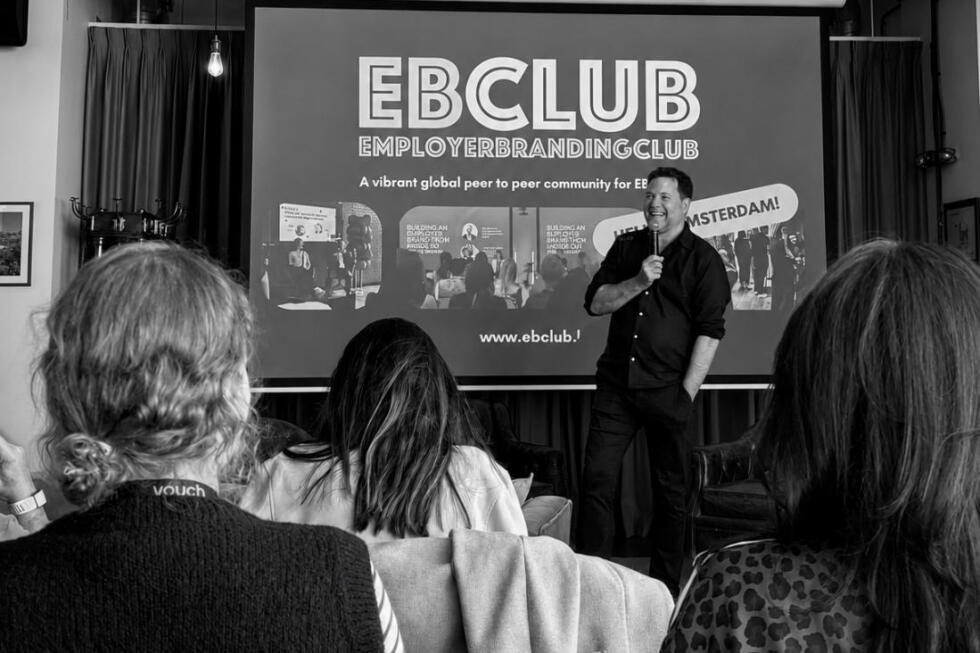
Explore EBClub
Find upcoming events, meet the people shaping the community, join the conversation or learn how to support EBClub as a partner.
| EBClub | What you will find | Explore |
|---|---|---|
| About EBClub | Learn how EBClub connects employer branding practitioners through peer learning, discussion and shared experience. | Explore EBClub |
| Events | Browse upcoming EBClub gatherings, panels and practitioner-led sessions around the world. | View events |
| People | Meet the practitioners, ambassadors and contributors supporting the EBClub community. | Meet the community |
| Join EBClub | Connect with employer branding professionals sharing ideas, testing approaches and learning together. | Join EBClub |
| Partner with EBClub | Support practitioner-led events, industry discussion and wider access to employer branding knowledge. | Explore partnerships |