


The new year tends to bring two kinds of confidence: the confident forecast, and the confident internal rollout.
This week’s reading sits in the gap between them. Leaders are talking about AI-driven efficiency, while employees are reporting a messier reality. Companies are tightening expectations in hybrid work and performance. Hiring is getting pickier, and not always in ways that improve quality. Meanwhile, the retention conversation is shifting again, away from perks and toward how work is actually designed and governed.

Helping HR, talent acquisition, employer branding, and company culture professionals find careers worth smiling about.
If 2026 is going to be a year of advantage, it is unlikely to come from adopting the most tools. It will come from building trustable operating choices: what gets automated, what stays human, how time is protected, and who gets a fair shot at opportunity.
This Week’s Paper Cut's
Jump to the video edition of this article, or listen here ↯
We keep tracking to a minimum. This podcast is hosted on PodBean, which may place cookies that measure viewing and personalize content. We only load the player after you consent to these cookies. You can update your cookie settings any time.
AI Agents Are Spreading, Governance Is Not
The agent conversation has moved quickly from demos to deployment. Deloitte’s warning, via reporting this week, is that workplace adoption is outpacing safety and protocol. That should not surprise anyone who has watched “move fast” culture meet compliance culture in the same calendar invite.
There is also a second problem, quieter but more immediately painful: credibility. A new benchmark highlighted by TechCrunch suggests current agents still struggle with real professional tasks in law, banking, and consulting, with early results coming in well below what most firms would accept from a junior hire.
This helps explain the growing dissonance in workplaces. Executives can see faster draft cycles and more output. Employees often experience extra review burden, more checking, and more “AI clean-up” work. The result is a familiar enterprise pattern: leadership declares efficiency, teams feel busier, and trust becomes the casualty.
Employer Brand POV:
Make “agentic AI” legible. Publish a simple internal standard: where agents are allowed, where they are not, and what oversight looks like. Treat safety as part of adoption, not the paperwork you do afterwards. Measure outcomes people recognise (cycle time, error rates, handoff friction), and share results in plain language. The best story you can tell candidates is not that you use AI, it is that you run it responsibly.
📌 Sources:
 Webb Wright

 Russell Brandom

 Frank Landymore

- https://www.wsj.com/lifestyle/workplace/ceos-say-ai-is-making-work-more-efficient-employees-tell-a-different-story-6613ce9d
- https://www.forbes.com/councils/forbescommunicationscouncil/2026/01/21/how-to-make-ai-rollouts-clearer-so-employees-actually-buy-in/
Retention Is Built on Systems, Not Policies
Harvard Business Review makes the argument bluntly: policies are not enough. Retention shows up when hiring, pay, progression, workload, and recognition reinforce each other. When those pieces contradict each other, even good benefits feel like noise.
Fast Company lands in the same place from a different angle: burnout behaves like an operations problem. It thrives in bottlenecks, false urgency, unclear ownership, and collaboration overload.
And culture, as Inc reminds everyone, is not what gets printed. It is what gets rewarded, what gets ignored, and what gets done when things get tight.
Taken together, the implication is uncomfortable but useful. The retention fight in 2026 is less about a new promise, and more about removing the internal contradictions that make work feel pointless.
Employer Brand POV:
Audit your system, not your slogans. Where do you say “growth”, but promote for endurance? Where do you say “wellbeing”, but reward always-on responsiveness? Pick one high-friction workflow and redesign it end-to-end. Then communicate the change like a product update: what changed, why, and how it helps people do better work.
📌 Sources:
 Joseph Fuller

- https://www.fastcompany.com/91462106/burnout-is-an-operations-issue-workplace-burnout
- https://www.inc.com/maltekramer/culture-is-what-you-do-not-what-you-print/91289589
- https://www.bizjournals.com/bizwomen/news/mentoring-matters/2026/01/leadership-that-scales-clarity-over-burnout.html
Hybrid Work Enters the Receipts Era
A noticeable shift is underway in hybrid and performance conversations. The soft language of “trust” is being replaced by demands for proof. Business Insider reports on companies pushing employees to demonstrate productivity more explicitly, often alongside bigger AI spend and tighter reviews.
Meanwhile, some workplace commentary is landing on a simpler truth: when in-person time is genuinely chosen, teams often build rhythms that feel less like enforcement and more like coordination. Federal agencies are also testing the boundaries of in-office rules, with exceptions, disputes, and operational constraints driving real-world variability.
For employer brand leaders, this is a moment to be careful. If you tighten control without improving the work design, people experience it as pure extraction. If you tighten expectations while also reducing friction and clarifying what “good” looks like, it can read as professional, not punitive.
Employer Brand POV:
If you want receipts, provide receipts. Define what good performance looks like, how it is measured, and how managers are trained to apply it consistently. Publish team norms that reduce chaos (service hours, handoffs, meeting rules). Candidates do not need perfection, they need clarity they can trust.
📌 Sources:
 Tim Paradis

 Jory Heckman
Hiring Gets Tighter, Gatekeepers Get Louder
There are two labour-market stories running in parallel.
One is macro: economists are debating whether hiring is cooling and what that means for workers’ leverage, with jobless claims and other indicators sending mixed signals. The UK picture is also being tracked closely, with official statistics and recent reporting pointing to a softer jobs market.
The other story is inside the hiring process itself. ETHRWorld’s reporting on “boss-level bias” is a useful reminder that many hiring systems still default to comfort and familiarity, even when organisations claim to be skills-led. If the top of funnel is being filtered by informal preference, AI tools will not fix fairness, they will scale the bias faster.
And at the entry level, the tone is hardening. The Wall Street Journal reports top MBAs are struggling to land roles, which signals how competitive white-collar entry and early-career hiring has become.
Employer Brand POV:
Treat “gatekeepers” as a design problem. Tighten structured interviews, make decision criteria explicit, and audit where managers override process. If early-career hiring is slowing, build credible alternatives: apprenticeships, project-based entry, returnships, and internal mobility that is more than a slide deck. When the market gets tighter, your process becomes your reputation.
📌 Sources:
 Tom Rees

 Naveen Manokaran,Vidhya Sathish Kumar

 Julia Williams

- https://www.reuters.com/world/us/us-weekly-jobless-claims-unexpectedly-fall-amid-seasonal-adjustment-challenges-2026-01-15/
- https://www.wsj.com/economy/jobs/economists-job-market-hiring-2213807b
- https://commonslibrary.parliament.uk/research-briefings/cbp-9366/
- https://www.wsj.com/lifestyle/careers/even-mbas-from-top-business-schools-are-struggling-to-get-hired-11f4a167
- https://finance.yahoo.com/news/cangrade-releases-2026-hiring-outlook-144000454.html
Layoffs
Cuts are still arriving in familiar ways: restructuring, reprioritisation, and the occasional strategic rebrand.
Meta is reported to be preparing layoffs as it rebalances spending priorities. Amazon is also reported to be planning further job cuts, with leadership framing them around cost and efficiency rather than “AI replacement.” Vimeo has reportedly cut staff following its sale to Bending Spoons.
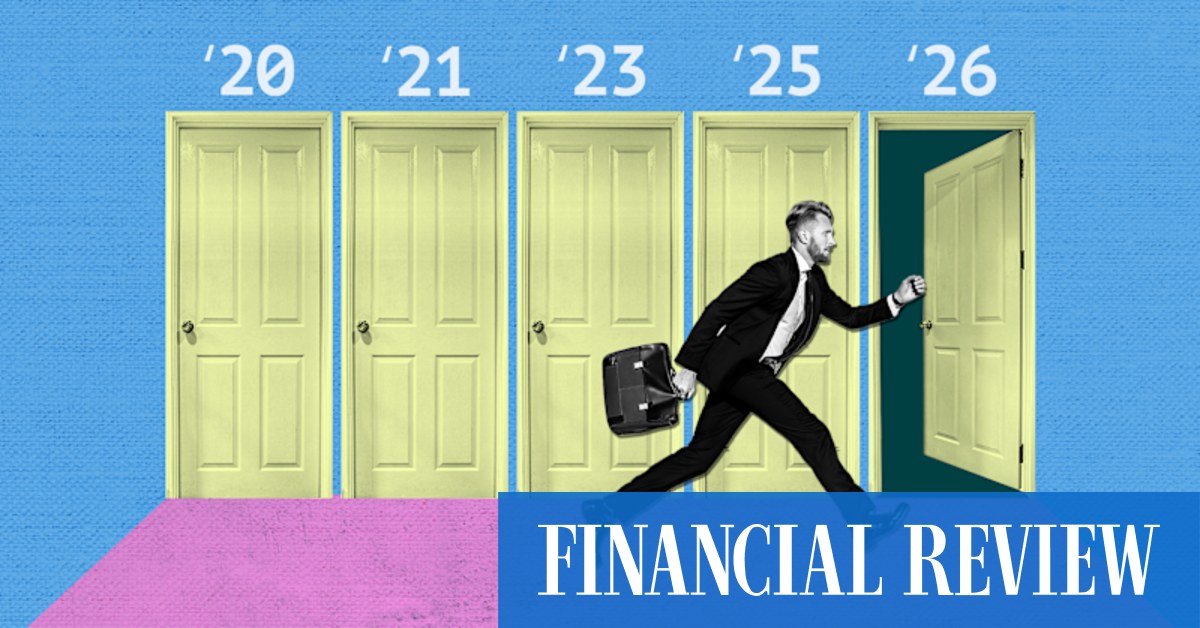
In the background, “quiet cutting” coverage is resurfacing, which is a reputational hazard even when it is technically legal. And some leaders are openly signalling deeper reductions ahead.
One counter-signal is worth noting: there are still companies hiring deliberately through the slowdown, which makes clarity in employer messaging even more important than usual.
Employer Brand POV:
Avoid ambiguity. If you are cutting, explain the business logic and the people plan: severance, support, redeployment, and what happens next. Do not let “quiet” become the defining adjective attached to your employment brand. If you are hiring, be explicit about where growth is real, and what stability looks like.
📌 Sources:
 TOI Tech Desk

 Sydney Bradley
 Yoko Nicole

 Rachael Bolton
 Bronwen Clune

- https://www.tipranks.com/news/meta-prepares-layoffs-as-it-rebalances-spending-priorities
- https://www.nytimes.com/2026/01/19/business/snohetta-nlrb-complaint.html
Closing Thoughts
The through-line this week is not “AI”, it is credibility.
Agents are arriving, but trust has to be engineered. Retention is less about individual policies and more about whether the system makes sense. Hybrid work is moving from debate to documentation. Hiring is tightening, which makes fairness and clarity more visible, not less.
A useful move for the week: pick one workflow where people feel the most waste, map it, cut the friction, and tell the story with evidence.
Video Edition
🎥 Prefer to watch? Check out the video edition of Paper Cut for sharp takes on this week’s biggest trends in employer branding and HR.
We keep tracking to a minimum. This video is hosted on YouTube, which may place cookies that measure viewing and personalize content. We only load the player after you consent to these cookies. You can update your cookie settings any time.
 EBN