


Happy New Year! January is when everyone promises reinvention, and the labour market gets its yearly dose of drama. This year’s soundtrack is “AI transformation,” a phrase that can mean anything from genuine redesign to a polite way of saying “we are cutting costs.”
Meanwhile, the change with the most immediate impact on people is quieter. Work is being renegotiated around time. Not flexibility as a feel-good perk, time as a system: meeting load, response expectations, schedule control, and who pays the “time tax” when collaboration gets messy.

Helping HR, talent acquisition, employer branding, and company culture professionals find careers worth smiling about.
This week’s reading offers useful signals on where AI rhetoric is outrunning labour reality, what schedule autonomy is turning into on the ground, and what narrowing entry routes mean for hiring, development, and employer reputation in 2026.
This Week’s Paper Cut's
Jump to the video edition of this article, or listen here ↯
We keep tracking to a minimum. This podcast is hosted on PodBean, which may place cookies that measure viewing and personalize content. We only load the player after you consent to these cookies. You can update your cookie settings any time.
AI Jobs: Between Panic and PR
AI is going to change work. The part worth watching is pace, scope, and who gets supported through the change.
Forrester’s updated forecast points to around 10.4 million US jobs lost to AI and automation by 2030. That is a headline number, but the more operational takeaway is the nearer term: the next few years remain mostly human, with AI shaping tasks far more often than it eliminates roles outright. In employer terms, that puts 2026 in “redesign and reskill” territory more than “redundancy wave” territory.
Oxford Economics offers a second, less dramatic lens: many “AI layoffs” look like familiar cost cutting, sometimes packaged in newer language that plays well with markets. If that view holds, the risk for HR and employer brand teams is not just fear, it is misallocation. Companies can burn a year talking about transformation while neglecting the mechanics of how work actually gets done.
There are also early signs of how operating models may evolve. The World Economic Forum outlines multiple job futures by 2030, including scenarios where disruption is contained and others where it accelerates. McKinsey’s CEO says the firm already uses tens of thousands of AI agents alongside humans, a clue that “headcount” and “capacity” are becoming separate concepts. Geoffrey Hinton continues to raise the uncomfortable possibility that profits could rise faster than employment in some industries.
For employer brand leaders, none of this needs ideology. It needs design. Candidates and employees will judge what they can see: whether AI tools make work easier or just add another layer, whether learning is supported, and whether early career paths remain real.
Employer Brand POV
Make the internal reality legible, then make it measurable.
- Clarify which tasks are expected to change, and what people should learn next to stay effective.
- Build reskilling into routine operations, not into optional learning libraries nobody has time to open.
- Share internal examples of AI used well, including what improved and what broke the first time around.
- Treat AI agents as part of the workflow with clear ownership, quality checks, and service expectations.
- Tie capability building to progression, so “learning the new way of work” is not unpaid extra credit.
📌 Sources
 Dexter Tilo

 Nick Lichtenberg

 Thibault Spirlet
 Lakshmi Varanasi
 Jason Ma

Flexibility 2.0: Control the Clock
Remote versus office is no longer the sharpest edge of the debate. Many employees have accepted that employers will set location rules. What is sharpening in 2026 is the question of time: who controls the day, how predictable it is, and whether work expands to fill every gap.
JLL reporting suggests workers have made their peace with “where,” and are now pushing harder on “when.” Fortune frames this as a shift in the retention lever: schedule autonomy is becoming more valuable than office perks. The rise of “microshifting” fits the same pattern, people breaking the day into smaller work blocks to match energy, caregiving, commuting, or simply concentration.
Microshifting is also a good example of how a humane idea can turn into a mess without guardrails. In healthy environments it protects deep work and reduces burnout. In unhealthy ones it fragments the day into constant partial attention and stretches “work time” across the entire waking life.
At the same time, enforcement is tightening. Reports suggest monitoring systems for return-to-office compliance are scaling. Pay trade-offs are being discussed in blunt terms, including the idea that a lower paid remote role can feel like a better deal than a higher paid in-office role once the time cost is counted. Time is being priced, even when it is not formally on the balance sheet.
For HR and employer brand teams, this is an operating question. Policies can say “flexible,” but talent experiences calendars and expectations. Manager behaviour often decides whether autonomy is real or theoretical.
Employer Brand POV
Treat time as a design surface, and make the rules explicit.
- Define team service hours, response expectations, and protected focus time, so “flexibility” is not a guessing game.
- Track attrition and internal mobility against schedule control, meeting load, and predictability.
- Run microshift pilots where they matter most, caregivers, global teams, roles with heavy collaboration, then document what changes.
- Reward managers for outcomes and team health, not visible busyness.
- Market flexibility with specifics people can test, not slogans people have learned to distrust.
📌 Sources
 Nick Lichtenberg

 Nick Lichtenberg

 People Matters Pte. Ltd.
 Henry Chandonnet

 Libby (Elizabeth) Sander

Pipelines Are Bending, Not Breaking
The traditional college-to-office route is under pressure. Randstad’s chief executive has suggested graduates look more seriously at trades, hospitality, and STEM areas where demand is clearer, as entry-level white-collar pathways narrow. Separately, Washington Post coverage points to a workforce dynamic employers rarely say out loud: the average new hire is older, and experience is being favoured over potential.
For employers, this creates a practical problem dressed up as a talent debate. If the entry ramp narrows while demand for “ready now” workers rises, organisations will keep competing for the same experienced people, then complain about shortages they helped create.
At the same time, HR’s role is changing. People leaders are increasingly pulled into core decision-making through analytics and AI, with a closer line to workforce planning, productivity, and commercial outcomes. That is progress, but it also raises the bar. Influence becomes responsibility, including responsibility for the pipeline.
The simplest reading is also the most inconvenient: if the market delivers fewer perfect candidates, employers will need to build more of what they need.
Employer Brand POV
Build credible routes in, and make development visible.
- Expand skills-first hiring where it makes sense, and back it with structured earn-and-learn tracks that convert.
- Invest in internal mobility as a system, rotations, mentors, clear role transitions, not a poster campaign.
- Connect employee capability to customer outcomes in metrics and reporting, so development is treated as performance infrastructure.
- Reduce reliance on pedigree signals when they do not predict success, and be explicit about what does.
- Communicate pipeline reality to candidates in practical terms they can verify, how progression works, what support exists, what conversion looks like.
📌 Sources
 Orianna Rosa Royle

 Jack Campbell

- https://www.washingtonpost.com/business/2026/01/14/workers-age-new-jobs-baby-boomers/
- https://qz.com/adp-employment-report-white-collar-job-losses
- https://www.upworthy.com/gen-z-career-minimalism-ex1
Layoffs, Briefly
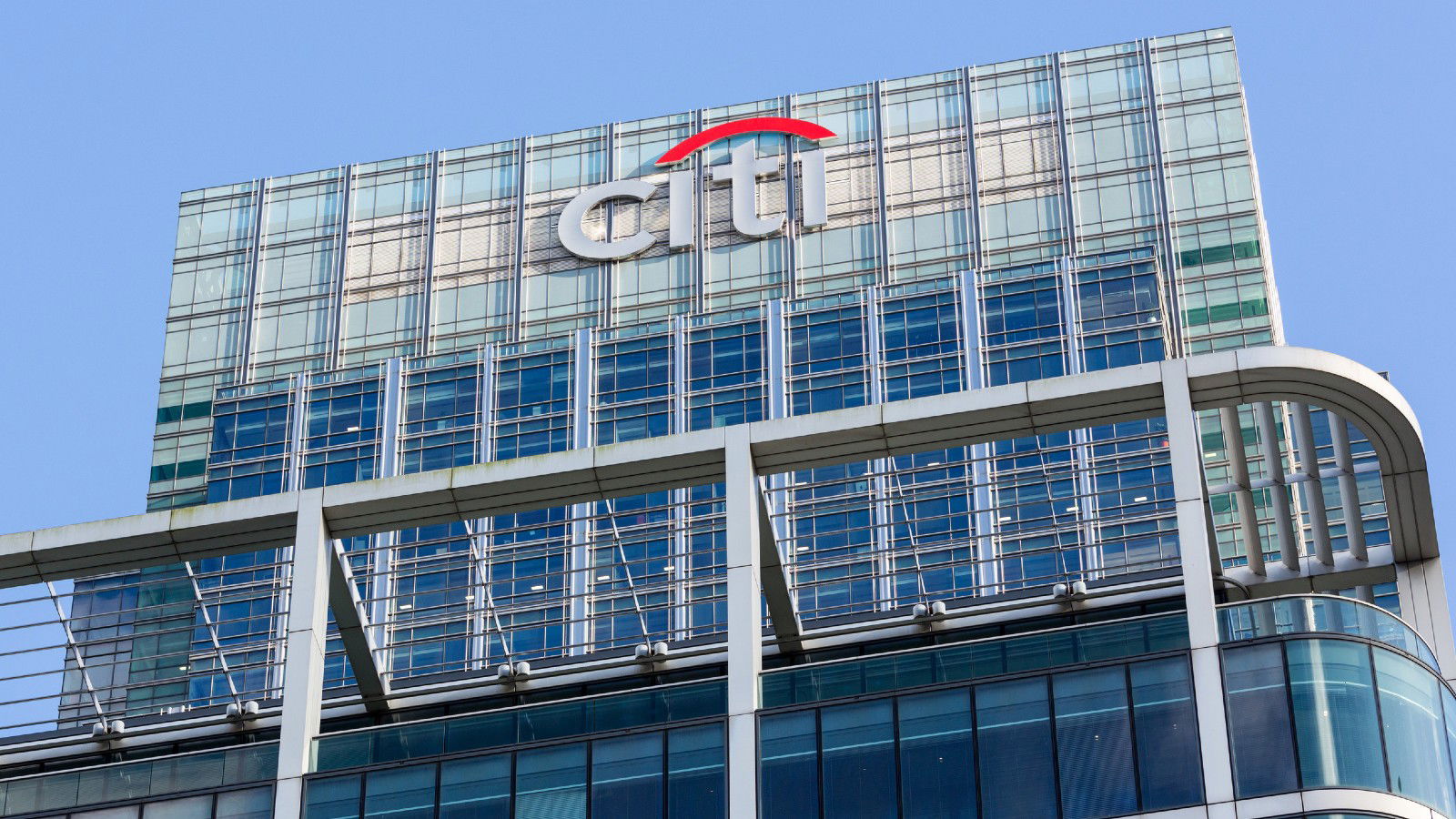
Cuts are back in the feed, and they are not all the same story. Citigroup is cutting about 1,000 roles as part of an ongoing restructuring. Bloomberg reports Wall Street eliminated 10,600 jobs last year, the most since 2016. Stellantis has signalled mass layoffs at a key plant in Poland. Ubisoft has confirmed cuts in Abu Dhabi amid wider restructuring. Trackers suggest more companies are trimming into January.
It is possible to hold two thoughts at once. Labour markets are softening in pockets, and some leaders are using AI as a convenient explanation for decisions driven by cost, strategy shifts, or earlier over-hiring. Even in companies that are not cutting, the work still needs redesign. Many teams have a workflow problem, not a headcount problem.
Employer Brand POV
When restructuring happens, clarity matters more than reassurance.
- Explain the business rationale in plain language, without dressing it up as inevitability.
- Put reskilling, redeployment, and rehiring pathways on the page, including what is real and what is limited.
- If hiring continues elsewhere, say so clearly and early, including where and for what roles.
- Assume candidates and employees are reading this through a trust lens, and write accordingly.
📌 Sources
 author Umairah Nasir
 Hannah Levitt

 Stanisław Kaleta

 People Matters Pte. Ltd.
 BI Staff

 Newsweek is a Trust Project member
Closing Thoughts
AI will keep generating bigger headlines than time. That does not make it the better management problem.
In 2026, employer reputation will be built through operating choices people can feel: whether AI makes work clearer or noisier, whether calendars protect focus or punish it, and whether talent pathways are real or performative. The organisations that do well are likely to be the ones that make fewer promises and run tighter systems.
A useful place to start this week is ordinary and specific: pick one team and look at the calendar, the learning rhythm, and the pathway forward. Remove one source of time waste, make one skill upgrade easier, and document one progression route more clearly. Repeat until it becomes normal.
Video Edition
🎥 Prefer to watch? Check out the video edition of Paper Cut for sharp takes on this week’s biggest trends in employer branding and HR.
We keep tracking to a minimum. This video is hosted on YouTube, which may place cookies that measure viewing and personalize content. We only load the player after you consent to these cookies. You can update your cookie settings any time.
 EBN