


The workplace has discovered a new job. Nobody advertised it. Nobody costed it. Nobody put it on the org chart.
It is botsitting.
Workers are spending more time prompting, correcting, feeding context into AI systems, checking the output, explaining the output, and occasionally apologising for the output when it wanders into the bushes wearing a confident little hat.
That is the contradiction sitting underneath this week’s stories. AI is presented as leverage. In practice, it often creates a new layer of supervision. Humans are still there, but the job shifts from doing the work to managing the machine that is supposed to do the work.

Your employees know the truth. Does your EVP? At Fathom we measure the "Credibility Gap" between your promise and their reality.
That has consequences. For early-career talent. For managers. For HR. For recruiters. For trust.
This Week’s Paper Cut's
Watch or listen here ↯
We keep tracking to a minimum. The video is hosted on YouTube and the podcast is hosted on PodBean, which may place cookies that measure viewing and personalize content. We only load the player after you consent to these cookies. You can update your cookie settings any time.
The Botsitting Economy
AI was meant to reduce busywork. Instead, it is producing a fresh category of labour: managing the tools.
Workers are spending more time giving AI context, correcting errors, stitching outputs together, and working out which model, agent, bot, plug-in, workflow, or dashboard is currently pretending to be the answer. It is the white-collar version of buying a “smart” appliance and then spending your evening updating the firmware because the fridge has opinions.
That is why the question is no longer “are employees using AI?” The better question is: how much human labour is being quietly absorbed to make AI look productive?
This matters because a lot of organisations are still measuring AI adoption as if usage equals value. It does not. More prompts do not automatically mean better work. More tools do not automatically mean less effort. More agents do not automatically mean fewer bottlenecks. Sometimes they create new ones, only with nicer interfaces.
HBR’s piece on why employees are not transparent about AI usage adds another wrinkle. If people hide how they use AI, or overstate how much value they get from it, leaders are making decisions with distorted data. In plain terms: the dashboard may be lying politely.
For employer brand, the issue is not whether the company has AI. Everyone has AI now, or at least a vendor deck saying they do. The issue is whether the work has been redesigned around it.
If the employee experience becomes “use the tool, check the tool, defend the tool, and still hit the old deadline,” people will not experience AI as innovation. They will experience it as clerical cosplay with electricity.
Employer Brand POV
AI adoption needs workload accounting. If AI adds checking, prompting, governance, and rework, those hours need to be recognised. Stop measuring usage as success. Measure quality, time saved, errors reduced, and work actually removed. Otherwise botsitting becomes another unpaid job hiding inside the old one.
📌 Sources
 Paige Gross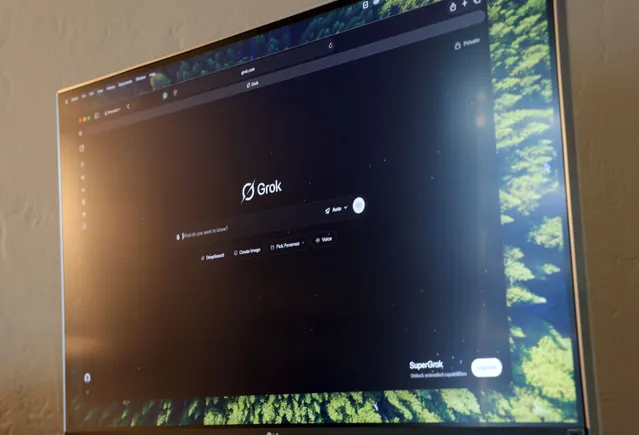
 Eric Anicich and Jeslyn Brouwers
 Alex Bitter
- https://www.businessinsider.com/salesforce-cuts-jobs-agentforce-2026-6
- https://fortune.com/2026/06/11/agility-robotics-c-h-robinson-ceo-task-augmentation-not-mass-layoffs/
- https://www.hcamag.com/us/news/general/the-great-flattening-is-costing-more-than-organisations-bargained-for/577002?utm_source=ebn&utm_medium=news-feed&utm_content=story&utm_campaign=all
- https://www.ibanet.org/IBA-global-employment-report-highlights-AI-skills-shortages-and-employee-wellbeing-as-defining-workplace-challenges
- https://www.hrdive.com/news/workers-spend-more-time-managing-ai/822610/?utm_source=ebn&utm_medium=news-feed&utm_content=story&utm_campaign=all
The On-Ramp Is Now an Apprenticeship Problem
The graduate jobs story keeps getting misread as a technology story. It is really an apprenticeship story.
Remote work has become part of the debate because early-career employees do not just need tasks. They need context, feedback, judgement, correction, and the small, unofficial lessons that happen when someone senior says, “Don’t send that yet,” or “Here’s how this client actually thinks,” or “That meeting was weird for reasons you won’t find in the minutes.”
When that layer disappears, new workers can look underprepared even when they are perfectly capable. The problem is not that graduates cannot work. The problem is that many employers have forgotten how to teach.
NPR, HR Dive, and related coverage all circle the same uncomfortable possibility: remote work may be harder on young workers because companies become less willing to hire and train people who need more support. That does not mean “drag everyone back to the office and call it culture.” It means early-career development needs an actual operating model.
The Guardian’s reporting on young people struggling to find work adds the broader pressure. Young, ambitious, and out of work is not just a sad headline. It is a pipeline warning. The longer people spend unable to enter stable work, the more damage lands on confidence, earnings, skills, and trust in institutions.
Then add rust-out, burnout, loneliness, and microshifting into the mix, and the early-career experience begins to look less like a ladder and more like a badly assembled flat-pack staircase. Some bits are missing. The instructions are vague. A manager somewhere insists it is “self-directed learning.”
Employer Brand POV
Graduate hiring needs structure. Define what the first 90 days teach. Give managers time to coach. Create purposeful in-person moments, not random attendance rituals. If you want juniors in the office, offer apprenticeship, not ambient carpet tiles.
📌 Sources
 Ginger Christ
 Sammy Gecsoyler
 Bryan Robinson, Ph.D.
- https://www.npr.org/2026/06/01/nx-s1-5843076/remote-work-college-graduates-unemployment-ai
- https://fortune.com/2026/06/04/gen-z-more-disconnected-distrustful-of-coworkers-than-older-colleagues-so-lonely-taking-off-work/
- https://www.wsj.com/lifestyle/workplace/what-is-microshifting-workday-productivity-be5d150f
- https://www.fastcompany.com/91543404/rust-out-is-the-new-burnout-and-it-requires-a-different-fix-burnout-productivity-advice
- https://www.inc.com/soren-kaplan/a-60-year-study-of-800000-workers-just-found-the-number-1-cause-of-burnout-heres-what-to-do-about-it/91354235
Trust Is Becoming Regulated
A job advert used to be marketing. Increasingly, it is evidence.
The ghost jobs stories out of New York are a neat example of what happens when companies overplay ambiguity for too long. If employers post roles they are not actively trying to fill, candidates waste time, recruiters lose credibility, and governments eventually begin doing what governments do best: paperwork with consequences.
The same pattern is appearing across other people processes. Severance terms. Internal surveys. Compensation questions that mysteriously vanish. Remote-work decisions tested in court. DEI clauses in federal contracts. Retrenchments dressed up as opportunity. These are not disconnected HR stories. They are all examples of trust becoming procedural.
When companies fail to be clear voluntarily, the rules arrive.
This is uncomfortable for employer brand teams because it means the brand is no longer controlled by messaging. It is shaped by the accuracy of job ads, the honesty of internal communication, the fairness of exits, and whether employees believe the company is telling the whole truth or a legally sanded version of it.
The compensation survey stories are especially telling. Removing the question people most want answered does not make the issue disappear. It just makes the silence louder. A missing question can become a statement. Very efficient, in the worst possible way.
Employer Brand POV
Treat every people process as a trust document. Job posts, severance letters, survey design, remote-work policies, and DEI commitments all say something about the employer. If the process is vague, candidates and employees will fill in the blanks. They are rarely generous ghostwriters.
📌 Sources
 Laurel Kalser
 Ginger Christ
 Howard Levitt
- https://www.hcamag.com/us/specialization/diversity-inclusion/19-states-sue-over-anti-dei-terms-added-to-federal-contracts/578627?utm_source=ebn&utm_medium=news-feed&utm_content=story&utm_campaign=all
- https://financialpost.com/fp-work/b-c-court-decision-remote-work-case-employers-on-notice
- https://www.channelnewsasia.com/singapore/retrenchment-disguised-job-loss-apply-overseas-new-opportunity-6155641
- https://www.businessinsider.com/heres-the-standard-severance-package-salesforce-offers-us-employees-2026-6
- https://www.businessinsider.com/microsoft-employee-survey-compensation-question-omitted-2026-6
- https://www.businessinsider.com/microsoft-surveys-employees-sentiment-memo-2026-6
The White-Collar Slowdown Gets Selective
The labour market is not falling apart in one dramatic cinematic collapse. It is doing something more annoying. It is getting selective.
The BLS data gives the macro baseline. S&P Global points to global employment pressure as business outlooks darken and costs rise. ConstructConnect’s office recovery angle shows the white-collar layer softening in a way that matters beyond HR, because office demand, city centres, graduate hiring, and professional services all sit inside the same weather system.
This is where the job market story gets awkward for employers. A softer market may give hiring teams more choice, but it does not give them permission to be sloppy. The candidates struggling now are also the people who remember how they were treated when the market turns again.
The BBC, Guardian, Fast Company, and News.com.au pieces collectively show a market where opportunity is uneven. Some sectors still hire. Some workers still move. Others are stuck in longer searches, weaker bargaining positions, or roles that do not match their ability.
Employer branding tends to obsess over attraction when companies are hiring aggressively. In a selective slowdown, the smarter obsession is reputation maintenance. How you decline. How you communicate. How honest your job ads are. How you treat people who apply and never hear back. Little things, until they become the brand.
Employer Brand POV
A cooler labour market is not a moral holiday. Keep candidate experience clean, direct, and humane. If roles are paused, say so. If hiring timelines change, update people. Talent communities are not compost heaps for abandoned applications.
📌 Sources

 Devin Bell, Associate Economist
 Sammy Gecsoyler
 Anna Holligan
- https://www.spglobal.com/market-intelligence/en/news-insights/research/2026/06/global-employment-slumps-as-business-outlook-darkens-and-costs-rise
- https://www.news.com.au/finance/work/at-work/deloitte-warns-slowing-economy-not-ai-will-make-it-harder-to-find-a-job/news-story/6135962464d58e29c9291bdb457b2c1f
- https://www.fastcompany.com/91554967/the-job-market-is-bouncing-back-but-not-for-these-workers
- https://www.biospace.com/job-trends/may-layoffs-hit-nearly-7-000-with-most-cuts-from-takeda-biontech
The Cut List
The Cut List is our weekly roundup of layoffs and restructures, tracked for what they do to talent confidence, not just headcount.
This week’s strongest pattern is that AI has become a new grammar for restructuring. Sometimes it is the reason. Sometimes it is the backdrop. Sometimes it is simply the expensive strategic weather system hovering over the org chart.
Reuters’ China story is the clearest macro example: quiet layoffs arriving while AI adoption is being promoted. That tension is now global. Companies want the productivity story without the employment backlash. Good luck with that. The receipt appears to have itemised itself.
Meta’s cuts reportedly hitting managers and software engineers, Salesforce trimming while pushing Agentforce, Google Cloud cutting into cybersecurity teams, Uber restructuring under an AI efficiency story, Xbox preparing further reductions, Shopee cutting in Singapore, and various biotech, logistics, and cloud-related cuts all point to the same mood: nobody is quite sure which roles are safe, and everyone is pretending the spreadsheet is strategy.
For employer brand, the risk is repetition. Every new layoff makes the next AI rollout sound less like enablement and more like foreshadowing.
Employer Brand POV
If you cut, explain what changed and what support exists. If AI is part of the reason, say exactly how. Do not hide behind foggy transformation language. Employees can smell euphemism through concrete.
📌 Sources
- https://www.reuters.com/business/world-at-work/china-inc-deploys-quiet-layoffs-beijing-promotes-ai-adoption-2026-06-10/
- https://www.businesstimes.com.sg/international/global/china-inc-deploys-quiet-layoffs-beijing-promotes-ai-adoption
- https://www.businessinsider.com/meta-layoffs-managers-software-engineers-ai-spending-2026-6
- https://www.thestreet.com/technology/mark-zuckerberg-and-meta-face-first-tough-test-after-layoffs
- https://www.businessinsider.com/google-clouds-quiet-layoffs-hit-cybersecurity-teams-2026-6
- https://www.businessinsider.com/uber-layoffs-ai-dara-khosrowshahi-2026-6
- https://www.businessinsider.com/salesforce-cuts-jobs-agentforce-2026-6
- https://www.hcamag.com/asia/news/general/xbox-to-lay-off-employees-next-month-as-it-takes-a-reset/578495
- https://sea.ign.com/xbox-series-x/244103/xbox-reportedly-planning-significant-layoffs-budget-cuts-for-marketing-and-more
- https://www.channelnewsasia.com/business/microsofts-xbox-plans-major-layoffs-next-month-bloomberg-news-reports-6175246
- https://vulcanpost.com/911697/shopee-layoffs-singapore-2026/
- https://www.biospace.com/job-trends/may-layoffs-hit-nearly-7-000-with-most-cuts-from-takeda-biontech
- https://wwd.com/sourcing-journal/logistics/expeditors-international-layoffs-230-job-cuts-artificial-intelligence-ai-1239006574/
- https://www.mercurynews.com/2026/06/11/tech-servicenow-jobs-salesforce-layoff-ubisoft-santa-clara-work-ai/
- https://www.tradingview.com/news/gurufocus:baa6b706a094b:0-microsoft-azure-layoffs-hit-china-unit/
- https://simplywall.st/stocks/us/software/nasdaq-intu/intuit/news/intuit-resets-cost-base-with-17-layoffs-to-prioritize-ai-gro
- https://www.moneycontrol.com/technology/oracle-30-000-job-cuts-incoming-nearly-18-workforce-may-be-affected-despite-ai-and-cloud-expansion-article-13943997.html
- https://timesofindia.indiatimes.com/technology/tech-news/tcs-chairman-n-chandrasekaran-says-company-has-no-layoff-plans-but-adds-if-hr-department-has-a-metric-on-/articleshow/131611872.cms
- https://bits-chips.com/article/forced-layoffs-avoided-until-may-2027-in-union-backed-asml-restructuring-plan/
- https://fortune.com/2026/05/28/ai-slashes-white-collar-jobs-salesforce-ceo-marc-benioff-one-department-still-hiring-sales/
Closing thoughts
The headline this week is not that AI is replacing work.
It is that AI is creating new work around the work.
Botsitting. Explaining. Checking. Covering. Measuring. Regulating. Reassuring. Cutting. Rehiring. Posting jobs that may or may not exist. Designing hybrid models that do or do not teach juniors how to function.
The future of work is apparently a lot of admin for something meant to remove admin. Very on brand for humanity.
If employers want trust, they need less mist and more machinery. Clear systems. Honest job ads. Real on-ramps. Visible governance. Better measures.
And, if possible, fewer robots that need a nanny.
Unnamed CHRO
 James Robbins
 James Robbins