

Key points
- Nvidia CEO Jensen Huang admitted in an all-staff email on Sunday 8 November that he was unfaithful to his wife, writing: "There is no excuse for what I did."
- The email followed reports that US officials believe the other person, a Megaspeed executive, was part of a Chinese effort to get close to Huang. China's embassy has denied the spying allegations.
- Nvidia's board has opened an independent investigation and says it has "no reason to believe" national security or company secrets were compromised. Huang remains CEO.
- The Republican chairs of three House committees have asked Huang to a closed-door briefing on 18 November.
- The letter is strong crisis writing, but it arrived after more than a week of press reports and two days after Nvidia played the story down.
- When a founder is the face of the employer brand, the founder's conduct is part of the EVP. Companies with a celebrity leader should stress-test their brand without one.
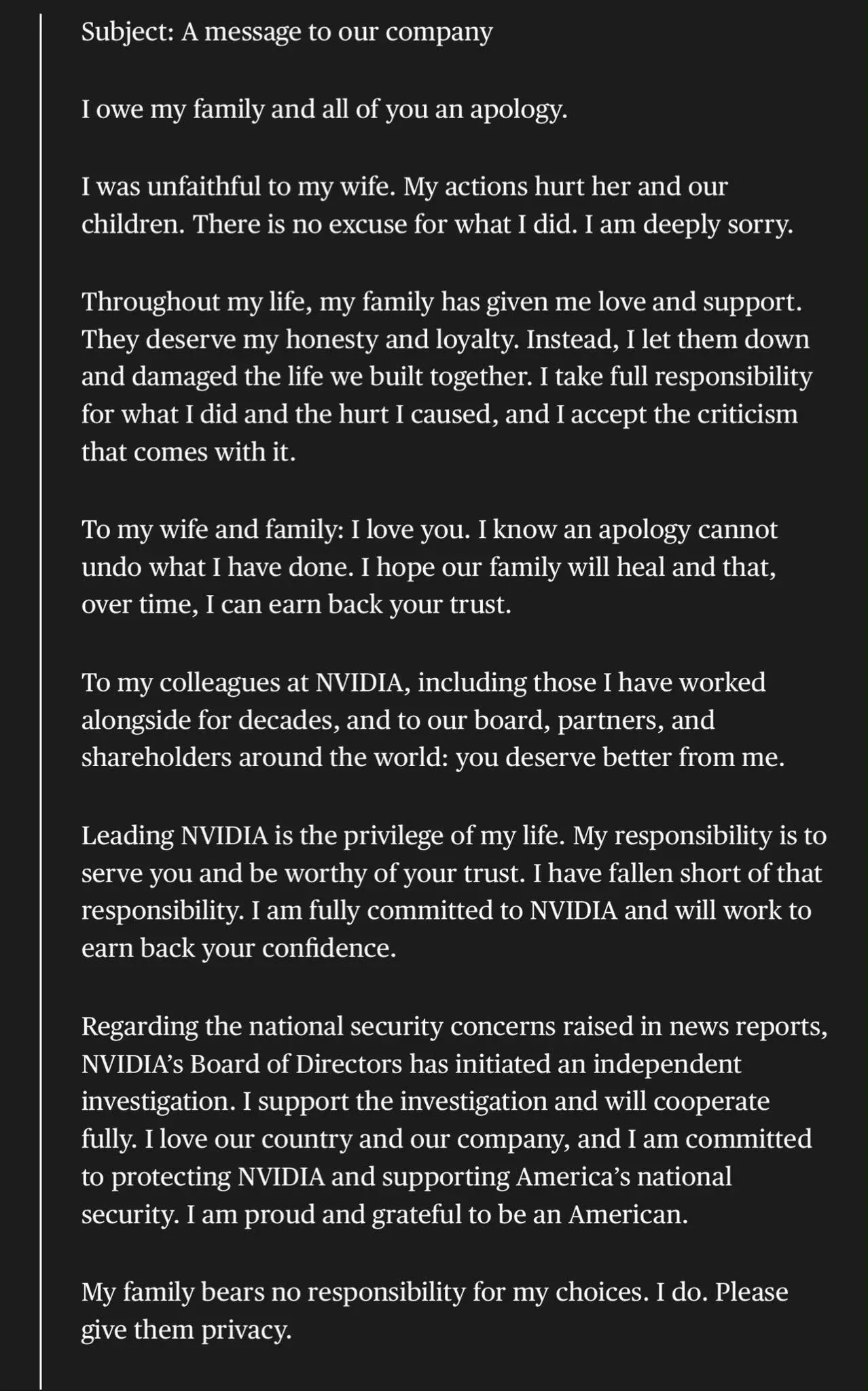
On Sunday, Nvidia's roughly 42,000 employees received an email from their chief executive that opened with an apology. "I owe my family and all of you an apology," Jensen Huang wrote. "I was unfaithful to my wife. My actions hurt her and our children. There is no excuse for what I did. I am deeply sorry."
The email followed reports in The New York Times and the Financial Times about the other person, an executive at Singapore-based Megaspeed. US officials reportedly believe she was part of a Chinese effort to get close to Huang and learn about Nvidia's technology. She has not responded publicly. China's embassy in Washington has denied the spying allegations. Megaspeed is one of Nvidia's largest customers (the Times reported it bought about US$4.8 billion of Nvidia equipment). In October 2025 Senator Tom Cotton asked the Commerce Department to investigate it over possible export-control breaches, and in December Bloomberg reported on questions about whether its Nvidia chips were reaching China. Megaspeed rejects that. A statement on its website says inspections by the Commerce Department's Bureau of Industry and Security, Malaysia's trade ministry and Nvidia found "no evidence of any violations", and that it does not rule out legal action against Bloomberg.
Nvidia's board has opened an independent investigation, overseen by a committee of independent directors with outside counsel. It says it has "no reason to believe that either national security or NVIDIA secrets were compromised", and Huang remains chief executive while the inquiry runs. Brian Mast, John Moolenaar and Rick Crawford, the Republicans who chair the House foreign affairs, China and intelligence committees, have asked him to a closed-door briefing on 18 November, The National reported.
The geopolitics belongs to people with security clearance. The employer brand question sits much closer to home.
The letter did its job
Credit where it is due. The email is short, written in the first person and free of corporate filler. There is no "mistakes were made" and no "personal matter" deflection. Huang names the failing in his opening lines, then turns to his staff. "My responsibility is to serve you and be worthy of your trust," he wrote. "I have fallen short of that responsibility." He closes with a commitment: "I am fully committed to NVIDIA and will work to earn back your confidence."
Most crisis letters read as though a committee drafted them and a legal team signed them off. This one reads as though a person wrote it. Employees have become very good at telling the difference.
Compare the last time a chief executive's private life became an employer brand story. In July 2025, Astronomer's Andy Byron was caught on a kiss cam at a Coldplay concert near Boston and resigned within days, leaving the internet to tell the story for him. (EBN's take on the kiss cam was less forgiving.) Huang at least wrote his own account.
What the letter could not fix
The timing is the problem. By Sunday, the story had been building for more than a week. The New York Times reported on 29 October that the Megaspeed executive had tried to cultivate close ties with Huang. On Friday 6 November, an Nvidia representative told reporters: "We're confident that if the US government believes that any person is a threat to American industry, it would let us know." The Financial Times reported on a US intelligence memo the next day, according to Wccftech. The admission came on Sunday.
So Nvidia staff watched the company line move from confidence to confession in 48 hours, and read most of it in the press first. Internal communications teams know which order works. Staff forgive a lot. Learning about their chief executive from a newspaper is rarely on the list.
Canva showed the other order last week. Melanie Perkins sent her letter on 1,271 affected roles to staff in the morning and published it afterwards, with every detail of the package in it. (EBN's analysis of the Canva letter covers what that bought her.)
There is a second gap. The letter answers a question the press had already settled, whether the affair happened. It says nothing about the question employees will care about at work: what the board's investigation will find. The apology covers the private failing. The professional one has gone to outside counsel, and staff will notice where the warm prose stops.
When the CEO is the EVP
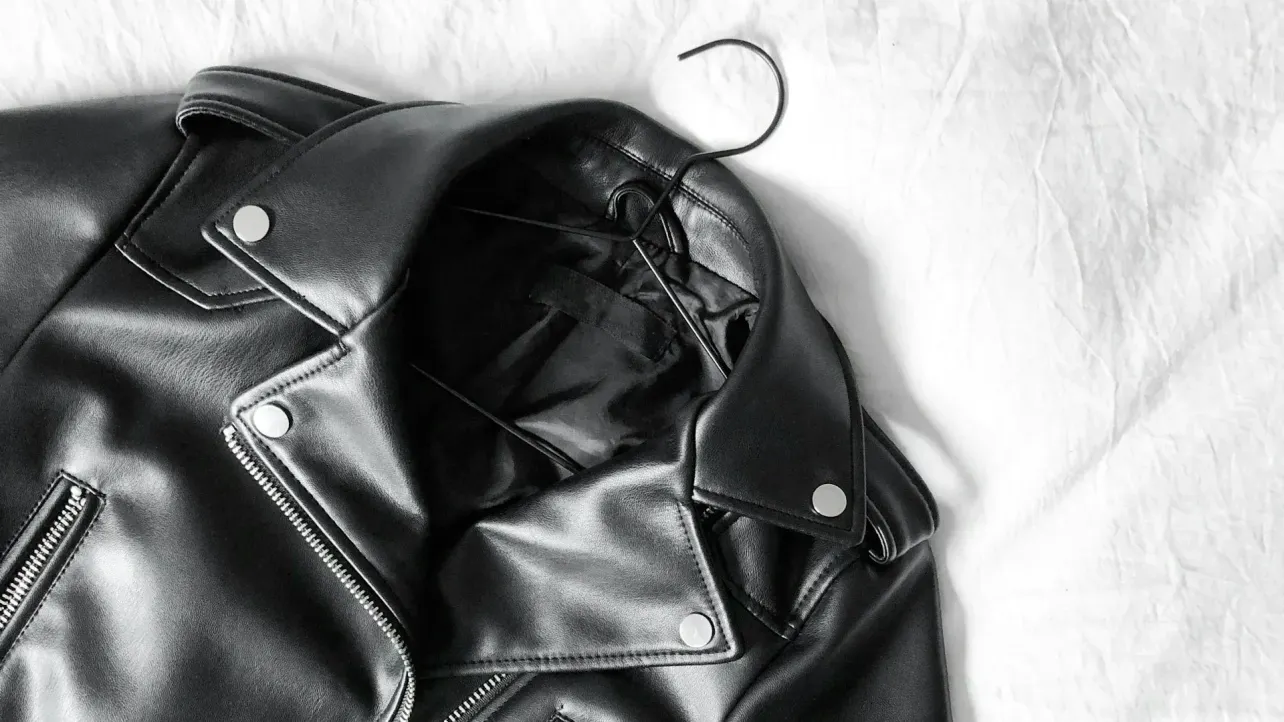
Few companies are as closely identified with one person as Nvidia. Huang co-founded it in 1993 and has run it ever since. He has said he has about 60 direct reports and holds no one-to-one meetings with them. The leather jacket, the flat structure, the keynotes: much of what candidates know about working at Nvidia comes through him.
That makes for a strong employer brand and a fragile one. When the founder is the proposition, his conduct becomes part of the employer value proposition, whether HR likes it or not. A hit to his reputation lands on one of the reasons people say yes to the job.
Huang has appeared in these pages before. In July 2025 he said he had "created more billionaires on my management team than any CEO in the world", a line that earned him a place in EBN's round-up of tech leaders talking their way into employer brand trouble. The jacket has form.
Nvidia can probably absorb this one. Its turnover rate was a miniscule 3.7% in fiscal 2026, according to its annual report, and its share price has done more for retention than any careers site could. The talent market is unlikely to walk away from the company building much of the world's AI infrastructure over one scandal. Even so, HRD America notes that Nvidia has no publicly named successor. Most companies with a celebrity chief executive have neither the share price nor the patience of the talent market to fall back on.
A founder-risk stress test for employer brand teams
Where the chief executive is the face of the employer brand, these questions are worth answering before anyone needs the answers.
- What is left without the founder? Strip the chief executive out of the careers site, recruitment ads and LinkedIn content. If what remains is stock photography and "we value innovation", the brand belongs to a person, and the talent pipeline carries a key-person risk.
- Who tells staff first? Agree an internal-first disclosure protocol with legal and communications now: who drafts, who approves, and how staff hear before the press does.
- Will the holding statement survive 48 hours? A statement that plays a story down becomes a second story if the facts change. Prepare lines that stay true whichever way the facts land.
- Is the bench visible? Other leaders need public profiles, and a named succession plan reassures candidates as well as investors. They read the same headlines.
- Who is listening the week after? Plan pulse surveys, manager briefings and monitoring of review sites and candidate questions, so the brand team hears what staff think before Glassdoor does.
Huang may well keep his job, and the board may find nothing. Every company that built its employer brand around one magnetic leader still got a free stress test this weekend. It is worth running one on purpose.
Takeaways
What did Jensen Huang say in his email to Nvidia staff?
He admitted he was unfaithful to his wife, wrote "There is no excuse for what I did", told staff he had fallen short of his responsibility to be worthy of their trust, and said he would work to earn back their confidence.
Is Nvidia's board investigating Jensen Huang?
Yes. A committee of independent directors, assisted by outside counsel, is investigating reports that Huang was the target of a foreign intelligence effort. The board says it has no reason to believe national security or Nvidia secrets were compromised, and Huang remains CEO during the inquiry.
Why does a CEO scandal affect the employer brand?
When a company's identity is closely tied to its founder, the founder's conduct becomes part of the employee value proposition. Damage to the leader's reputation lands on one of the reasons candidates join and employees stay.
What should employer brand teams prepare before a leadership crisis?
Test the careers content without the CEO in it, agree an internal-first disclosure protocol, write holding statements that stay true if the facts change, give other leaders public profiles, and plan how to listen to staff in the week after.
Why did the timing of Huang's email matter to employees?
Press reports about the relationship had been running for more than a week, and Nvidia had played the story down two days earlier. Staff read most of it in the press before hearing from their CEO, the reverse of internal-first disclosure.